|
ALAN PHELAN's practice involves the production of objects, participatory events and projects, curating and writing. These all inform and contribute to an interest in the narrative potential surrounding an artwork, located in an intertextual context. This places process as central to the artwork resulting in provisional or incomplete works, often presented as unmade but notably not fragmented or deconstructed. During his time in Serbia in 2006, Phelan collaborated with car designer Goran Krstic from Zastava Automobili, Kragujevac, to produce a three dimensional drawing of the Zastava car currently produced by the factory. This and other works explore moments of cultural and social translation or ‘blending-in'. This term comes from a ‘stealth' industry which seeks disguise or camouflage technology, for example disguising a mobile phone mast as a tree. Between language and social engagement the works are possibilities for re-engineering and different interpretations for both classic designs, machinery and car culture.
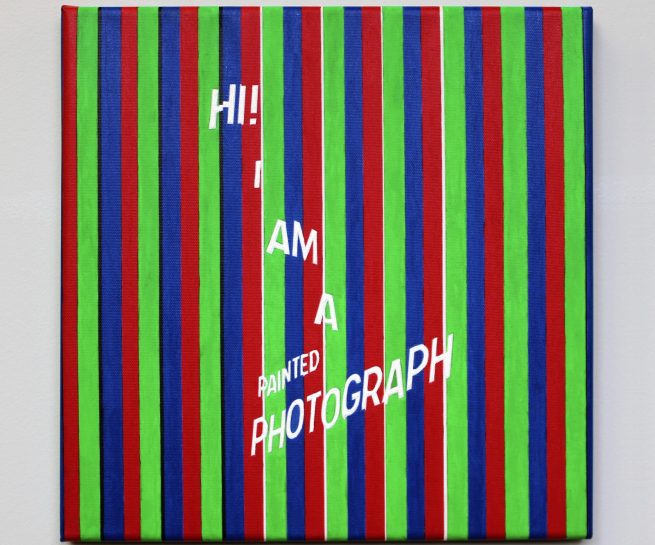
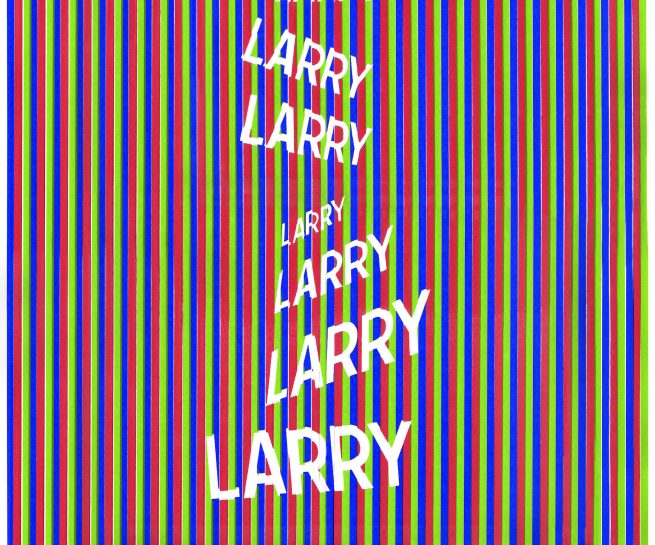
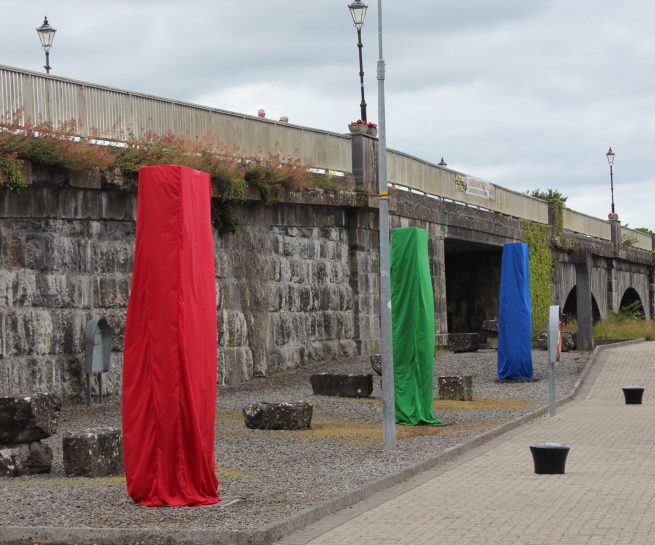
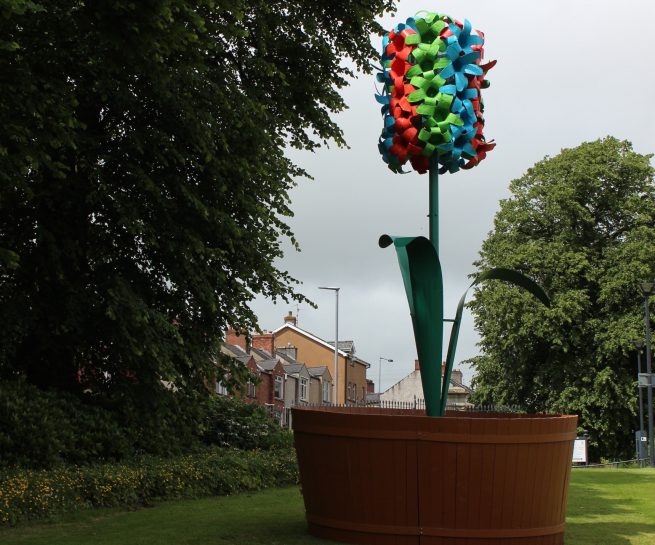
These works were developed further during the year through other exhibitions and projects contributing to the exhibition 'Fading Fast' in Portadown. |
| Transparency was been a recurrent aspect of my workPhelan's over the past few years, both literally as non-opaque surfaces ("Pig Traps" or "Grandstand") and as a way of clarifying practice by revealing process. Several projects have had accompanying web sites which act as on-line artist notebooks utilising hypertext narrative, sequential diaries and net.art re-presentations of the artworks. With any project there are a lot of discussions and work in the background and Phelan is interested in making these conversations available in conjunction with the finished work. This added an extra narrative dimension has the effect of complicating a work not clarifying it. |
| An important aspect of his work over the past few years has also involved other artists and groups with whom he has collaborated with in a variety of ways ("Three Stories" "Newtownwhowhatwhere?"). This has provoked chance improvisations and joint decision making acknowledging complexity through the integration of process into an artwork or project. In this context the implication for meaning is generous, no longer a closed system of signifiers resulting in a final work but rather an open-ended dialogue. Caught between different media this diffused authorship provokes the possibility of deferring an art object through several contexts, striving to make something more than the sum of its parts. |
| In the "Three Stories" project he worked with a group of residents from Rathfarnham, Dublin to make three short videos, which began with discussions about local history. Interviews were improvised with the participants discussing various private and social problems. Similarily in "Newtownwhowhatwhere?" residents from a part of Galway city, through 36 video interviews, discuss their relationships to the area which is then connected to a database of historical information. |
| "Lip Sync with Joe and Mel" used the questions of a radio presenter, repeated by a French man on a bus similar to a Linguaphone tape. Projected onto a chalked dripping screen, the work references the Mel Bocher work, "Language is Not Transparent", to investigate the role of language in remembering and imitating but also assigning relevance to seemingly chance dialogue. |
| This work was made in collaboration as was the piece for ‘Perspective 2002’ and then shown at the Whitney Museum, New York 2004-05 - "Sam Wagstaff Gives Good" which was a projection of hands flicking through a rolodex accompanied by a voice-over of an American man (aka Wagstaff) recounting in detail the personal items he has donated to museums over the previous 20 years. The dialogue was improvised by the actor as he shuffled through the fictionalised index of Wagstaffs household possessions. |
| "Journey to the Centre of the Blanchardstown Roundabout" surveyed the development in west Dublin where Phelan grew up, presenting a mixed media map reflecting the changing cultural and physical infrastructure.
|
| For the "Affinity Archive" (presented by the Metropolitan Complex) he donated several notebooks from the early days of his interest in art and developed a database to record the submissions to the archive. There was also finding aids and location markers positioned in the space. |
| "Gordon-Bennett" explored aspects of representation and media manipulation, connected across a biographical narrative, a reflection and action on mass communications and media celebrity. The multiple narratives that run through the work explore ideas, facts, or even allegations spread deliberately to further
an individual's cause or life mission. Gordon-Bennett includes sculpture installation, photography, and drawings. |
| For much more information check out the individual pages associated with these various projects and exhibitions from the main index page. |